 Pb28
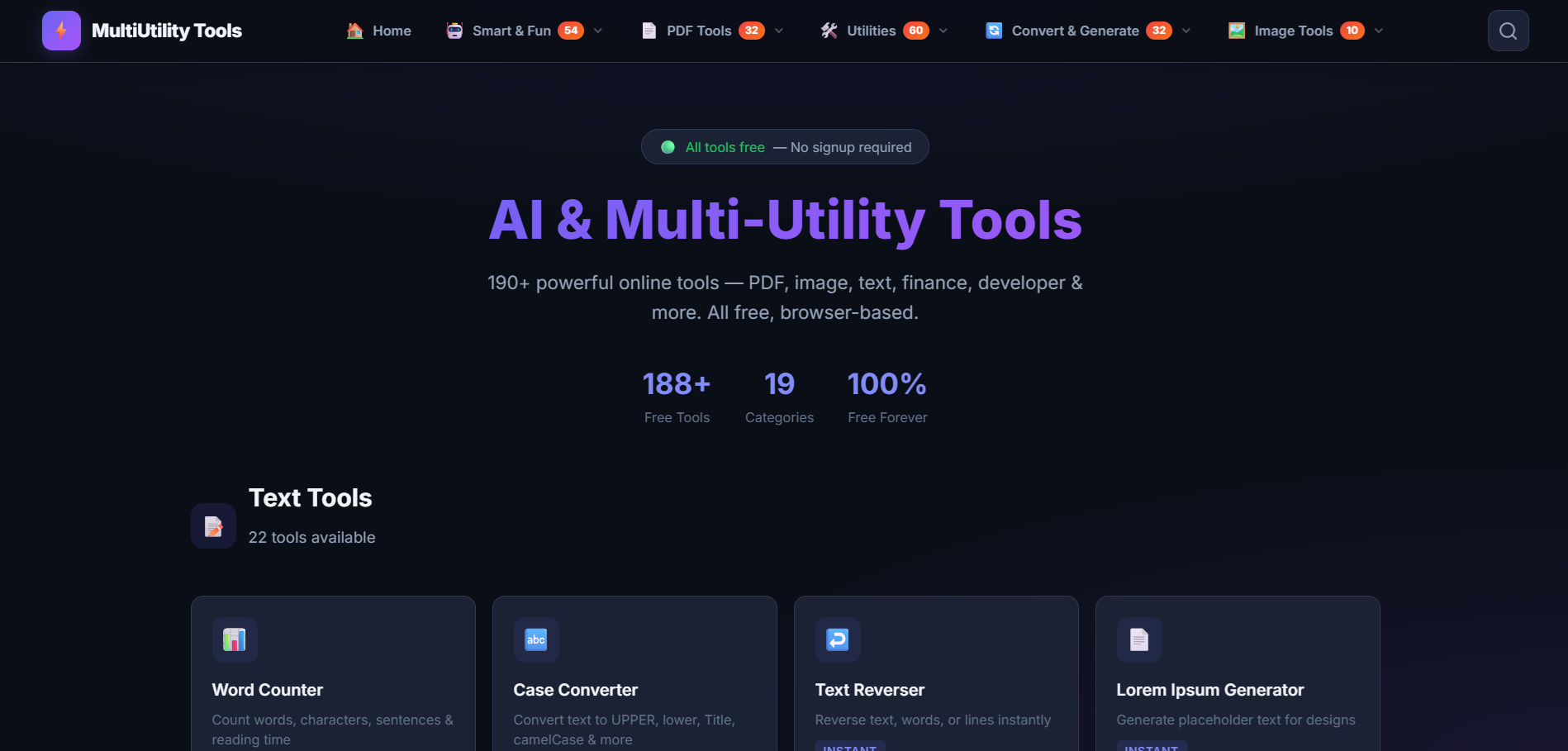
Pb28 AI & Multi-Utility Tools
Web Utility Application Pre-Deployment & Optimization Report
Target Platform: Programmatic Utility Web Assets
Audit Scope: AdSense Approval Blueprint, SEO Optimization, & Structural Hardening
Classification: Operational Documentation
1. Executive Summary
Web utility sites (such as online calculators, converters, encoders, or file format managers) generally generate high user interaction rates and session lengths. However, because these websites rely heavily on client-side or server-side functional code rather than long-form written articles, they require specific architectural considerations to clear Google AdSense review processes and prevent technical exploitation.
This baseline audit establishes the mandatory implementation steps required before submitting a utility project to public traffic networks.
2. Core Functional Auditing & Input Safety
Unlike standard blogs, utility projects handle continuous user inputs. This creates a broader attack surface that must be managed via specific validation protocols:
-
Input Sanitization: Every entry field must actively filter out cross-site scripting (XSS) and command injection vectors. Never trust client-side data variables directly before rendering them in the DOM or passing them to backend logic.
-
Prepared Queries (PDO): If your application tracks user session data, saves inputs, or features a database interface, all communication lines must leverage explicitly prepared statements to prevent SQL injection (SQLi).
-
Rate Limiting: Protect your processing assets. High-frequency loops or script execution pipelines should be throttled using server-side rate limits (e.g., token bucket algorithms) to prevent distributed denial-of-service (DDoS) automation from inflating hosting costs.

3. Google AdSense Structural Compliance Matrix
Because utility web applications natively contain very little editorial text, they are frequently rejected by programmatic ad systems for "Low Value Content." To avoid this fallback, your site architecture must include the following structural frameworks:
3.1 Trust and Transparency Infrastructure
-
About Us Layout: A detailed page describing the purpose of the web utility, the technology stack utilized, and the administration team responsible for keeping the calculation logic accurate.
-
Contact Interface: A clear, visible channel (such as a validated email path or structural contact form) allowing users to report calculation bugs or programmatic discrepancies.
3.2 Programmatic Privacy Compliances
-
Privacy Policy: A comprehensive document explicitly disclosing data aggregation practices, analytical tracking utilities, and cookie usage patterns relating to ad provisioning vendors.
-
Cookie Consent Consent Banner: A visible consent manager configured to intercept and register user selections before serving personalized ad tracking codes.
4. Technical Search Engine Optimization (SEO) Roadmap
To scale discoverability for utility terms, optimize the following core indexing vectors:
-
Semantic Micro-Content: Since the tools themselves are dynamic, incorporate static explanatory headings (e.g., "How to use this tool," "Formula & calculation breakdown") below the tool interface to provide search engines with contextual text crawl targets.
-
Canonical Mappings: Enforce explicit canonical self-referential variables within your header metadata configurations to eliminate duplicate index tracking for parameter modifications (e.g., matching filtered URLs).
-
Crawl Automation Mapping: Maintain a highly responsive structural sitemap matrix (
sitemap.xml) alongside explicit index allowance commands (robots.txt) to streamline search engine path discovery.
5. Next Steps for Implementation
-
Verify Legal Integrity: Audit the footer section of the live platform to ensure that the Terms of Service and Privacy Policy pages are live and fully visible.
-
Execute Functional Hardening: Review input-handling code blocks to confirm that no executable elements can be parsed into output view fields.
-
Embed Programmatic Placeholders: Prior to receiving your operational ad tags, define structural element wrappers inside your CSS system to prevent visual layout shifts (CLS) when third-party ad blocks are subsequently activated.